Tu carrito está vacío

Lijar madera lleva tiempo, y la calidad de tus cintas determina cuánto esfuerzo pones en cada pasada. Cuando una cinta se desgasta demasiado rápido o se obstruye después de unos minutos, no solo pierdes precisión, sino que también desperdicias material y pierdes impulso porque te detienes a cambiar cintas en lugar de desarrollar la forma o superficie que deseas para la pieza de trabajo.
Las cintas de lijado multipropósito flexibles te brindan un contacto constante tanto en tablas planas como en bordes contorneados, por lo que puedes mantener un movimiento de lijado consistente sin forzar la máquina. Las cintas agarran la madera de manera uniforme, lo que reduce los surcos y rayas que necesitarías corregir más tarde.
Muchos carpinteros mantienen varias cintas a mano porque cada proyecto tiene etapas que requieren diferentes granos y diferentes niveles de flexibilidad. Una cinta que funciona bien en la pata curva de una silla, por ejemplo, puede no funcionar igual en una tabla ancha. Red Label Abrasives fabrica cintas multipropósito flexibles para carpinteros que desean un desgaste predecible, caminos de lijado limpios y una variedad de opciones de grano.
Las cintas de lijado multipropósito flexibles son cintas abrasivas construidas con un respaldo que se dobla fácilmente alrededor de curvas, bordes y superficies con forma. Esta flexibilidad te permite mantener un contacto constante con áreas que una cinta rígida podría omitir o aplanar. Las cintas de Red Label Abrasives utilizan granos de óxido de aluminio que cortan uniformemente en maderas blandas y duras: cada grano se fractura durante el lijado, lo que expone nuevos puntos de corte y mantiene la cinta productiva en lugar de envidiarse.
Estas cintas utilizan una estructura de recubrimiento abierto, lo que significa que los granos abrasivos están espaciados para reducir la carga cuando trabajas con pino, cedro u otras maderas resinosas. El aserrín se compacta menos entre los granos, por lo que puedes trabajar más tiempo sin detenerte a limpiar la cinta. Están disponibles en tamaños como 1 x 30, 2 x 72, y varios otros utilizados en lijadoras de banco y a mano. Cada cinta está unida con una costura estable que se desplaza suavemente y mantiene la tensión bajo carga.
Con cintas de lijado multipropósito flexibles, puedes lijar piezas curvas o con forma mientras los granos abrasivos mantienen un corte consistente. Cada característica a continuación refleja un efecto directo y medible en cómo se desempeña la cinta durante el trabajo en madera.
Estas características dan como resultado una banda que ofrece un rendimiento confiable de principio a fin. Puedes avanzar a través de las etapas de conformado y alisado sin caídas repentinas en la tasa de corte o patrones de rayado irregulares.
Las bandas de lijado flexibles y multipropósito ofrecen excelentes resultados en una amplia gama de tareas de carpintería. Incluyen:
Estos casos de uso muestran cómo las bandas mantienen el control y la calidad de la superficie en una amplia gama de proyectos de carpintería. Puedes dar forma, alisar y preparar la madera con un corte consistente que no se desplaza cuando cambias de áreas planas a perfiles curvados.
El tamaño de la banda y el grano afectan cuán limpiamente eliminas material y cuán predecible es tu camino de lijado. Una banda que se ajusta a tu máquina mantiene la tensión constante, y un grano que coincide con la tarea te proporciona un corte controlado. Los puntos a continuación explican cómo medir tu banda, elegir un grano para cada etapa y almacenar las bandas para que se mantengan estables durante su uso.
Si no conoces la longitud actual de tu banda, puedes medirla envolviendo un trozo de cinta alrededor del camino vacío de la máquina y marcando el punto de encuentro. Cuando extiendas la cinta, la distancia entre las marcas es la longitud de tu banda. El ancho es la medida recta a través de la superficie de la banda. Tamaños como 1 por 30 pulgadas y 2 por 72 pulgadas coinciden con muchas lijadoras de banco y de mano, por lo que generalmente puedes confirmar el tamaño en el manual de tu máquina una vez que tengas las medidas.
Un grano grueso, como 40, 60 o 80, elimina marcas de sierra y reduce material grueso rápidamente. Usarías una correa de grano 40 para formar el taper inicial en un mástil de guitarra o para aplanar una tabla que aún muestra líneas de cepillo. Un grano 60 o 80 funciona cuando deseas una fuerte remoción de material sin arañazos profundos que tomen tiempo extra para mezclar.
Un grano medio, como 100 o 120, suaviza la superficie después de un modelado grueso. Cuando pasas de una correa de grano 80 a una correa de grano 120, el patrón de arañazos se vuelve lo suficientemente superficial como para preparar la madera para el lijado de detalles. Esta etapa es donde mezclas la superficie de un faldón de mesa, limpias los bordes de un frente de cajón o refinan un reposabrazos curvado.
Un grano fino, como 180 o 220, prepara la madera para tinte o acabado transparente. Cuando lijas con grano 220, los arañazos son lo suficientemente pequeños como para que no aparezcan como líneas bajo el acabado. Elegirías este grano cuando estés completando los últimos pasajes en una puerta de gabinete o alisar la tapa de una caja decorativa.
Las correas mantienen su forma por más tiempo cuando se almacenan en un lugar fresco y seco, alejado de la humedad. La humedad ablanda el respaldo y puede hacer que la correa se estire durante el uso, lo que cambia su seguimiento. Colgar las correas en un gancho o colocarlas planas previene los pliegues que crean bultos durante el lijado. Este método de almacenamiento mantiene las correas estables para que funcionen de manera uniforme tan pronto como las instales.
En Red Label Abrasives, fabricamos nuestras correas de lijado en los Estados Unidos utilizando lotes de producción controlados que mantienen una cobertura abrasiva y calidad de unión consistentes. Cada correa es inspeccionada por la resistencia de la costura y la distribución del grano antes de salir de la instalación, lo que te brinda un rendimiento predecible en múltiples correas del mismo paquete.
Cuando compras nuestras correas de lijado flexibles y multipropósito, te beneficias de lo siguiente:
Estos factores dan como resultado bandas de lijado que se mantienen estables, cortan de manera predecible y mantienen su rendimiento a lo largo de toda la vida útil del abrasivo. Puedes trabajar a través de múltiples etapas de preparación de madera sin errores en la tasa de corte o el comportamiento de la banda.
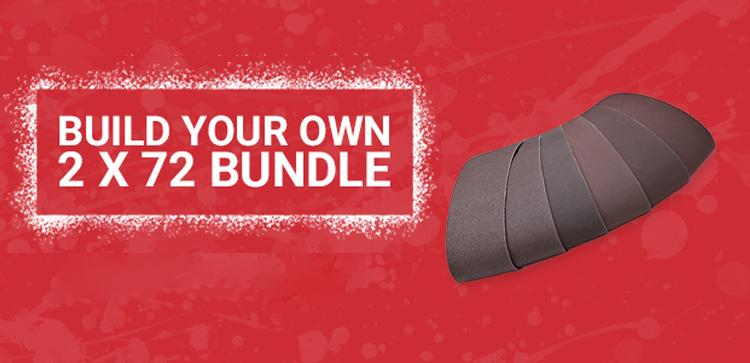
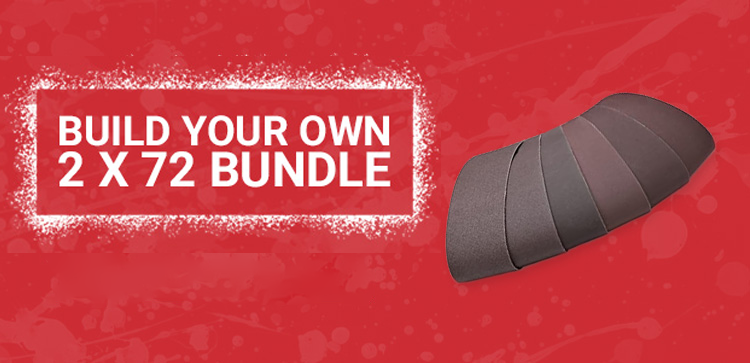
Red Label Abrasives fabrica bandas de lijado flexibles y multipropósito en tamaños de paquete que coinciden con las necesidades comunes del taller. Puedes pedir un paquete de seis cuando estés reemplazando bandas para un solo proyecto o un paquete de doce cuando quieras suficientes bandas para pasar por varias etapas de grano. Cada paquete utiliza los mismos estándares de fabricación, por lo que las bandas en el conjunto tienen una cobertura abrasiva y resistencia de unión consistentes.
Los pedidos superiores a $150 envían gratis dentro de los Estados Unidos, lo cual es útil cuando compras múltiples paquetes para un stock a largo plazo. Los pedidos más pequeños se envían a tarifas estándar, y empaquetamos las bandas para prevenir daños en las costuras durante el tránsito. Red Label Abrasives respalda nuestras bandas con una garantía de satisfacción, por lo que puedes solicitar asistencia o un cambio si una banda no cumple con los estándares de producción anunciados.
Puedes verificar el tamaño de la banda impreso en tu máquina, pero una medición rápida lo confirma. Envuelve un trozo de cinta alrededor del camino de la banda vacía, marca el punto de encuentro y coloca la cinta plana. La distancia entre las marcas es la longitud, y la medida recta a través de la cinta es el ancho. Esto te da un tamaño exacto incluso cuando la etiqueta original de la banda está desgastada o falta.
Una grano grueso, como 40, 60 o 80, elimina marcas de sierra y nivela marcas de herramientas de cepillos o uniones. Por ejemplo, una banda de grano 40 nivela una tabla curvada más rápido que un grano más fino porque cada grano elimina más material con cada pasada. Si estás dando forma a curvas, una banda de grano 80 te da suficiente control para refinar la forma sin dejar arañazos profundos que tardan más tiempo en eliminar.
Las maderas blandas con alto contenido de resina, como el pino o el cedro, empujan el polvo hacia los espacios entre los granos abrasivos. Una banda con una estructura de recubrimiento abierto se carga menos porque los granos tienen un espaciado más amplio. Si aún ves acumulación pesada, un rápido limpiado con un limpiador de bandas de goma elimina el polvo compactado y restaura el corte. Esto mantiene la banda productiva durante largas sesiones de lijado.
La tensión incorrecta o los rodillos desalineados causan la mayoría de los problemas de seguimiento. Cuando la banda no está lo suficientemente tensa, se desplaza hacia un lado y pierde contacto con la pieza de trabajo. Ajustar la perilla de tensión y confirmar que los rodillos estén cuadrados entre sí generalmente corrige el problema. Una banda con una costura fuerte y plana sigue el recorrido de manera más predecible porque la unión no se levanta al rotar.
La vida útil de una banda depende del tipo de madera, la presión que aplicas y el grano que estás utilizando. Las bandas gruesas se desgastan más rápido porque cada pasada elimina más material. Si estás lijando maderas densas como el arce o la nuez, la banda se desafila antes que en pino. Puedes extender la vida de la banda reduciendo la presión y dejando que los granos abrasivos hagan el trabajo en lugar de forzar el corte.
Sí, siempre que las mantengas en un espacio seco con una temperatura estable. La humedad ablanda el respaldo de la banda y causa estiramiento durante el uso, lo que afecta el seguimiento. Colgar las bandas en un gancho o colocarlas planas evita que desarrollen dobleces que crean bultos durante el lijado. Este método de almacenamiento preserva la forma de la banda y la estabilidad de la unión.
Las bandas de lijado multipropósito flexibles de Red Label ofrecen una acción de corte limpia y un desgaste confiable en una amplia gama de tareas de carpintería. Cuando eliges una banda con el tamaño y grano adecuados, controlas cómo se desarrolla la superficie desde el modelado áspero hasta el lijado final. Esto te permite completar proyectos con menos interrupciones y menos correcciones.
Puedes explorar nuestros tamaños y paquetes de grano disponibles para que coincidan con tu lijadora y tu carga de trabajo típica. Si estás trabajando con herramientas compactas, máquinas de mano más grandes, o una mezcla de ambas, encontrarás opciones de bandas que se adaptan a cada configuración. También puedes reabastecerte de múltiples granos a la vez eligiendo un paquete de doce, que te da suficientes bandas para avanzar en el modelado y la preparación del acabado sin esperar envíos adicionales. Si tienes preguntas o te gustaría hacer un pedido, llama al 844-824-1956 o completa nuestro formulario de contacto hoy!