Tu carrito está vacío




Key Takeaways:
If you’ve ever handled a freshly machined metal part and noticed a sharp edge or slight ridge along the surface, you’ve encountered a burr. Burrs form when material is displaced rather than cleanly cut during operations such as drilling, milling, stamping, or grinding. Even a small one can cause problems, so you’ll want to remove it.
Deburring removes these unwanted edges from a wide range of materials, including steel, aluminum, plastics, and composites. It takes place after machining and before final inspection or assembly, so that each part meets the necessary standards. In industries such as aerospace, automotive, and medical device manufacturing, deburring is an important part of quality control.
In this article, we’ll outline why burrs form in manufacturing environments, how to remove them via deburring, and the different methods used, along with some best practices that can help you achieve even better results.
Deburring is the removal of unwanted raised edges or small pieces of material that remain on a part after machining or fabrication. These edges form when cutting tools push material outward instead of shearing it cleanly. You’ll find burrs on drilled holes, milled edges, stamped parts, and nearly any surface where material has been removed.
A burr can take many forms, including:
Even when it looks minor, it can interfere with how a part functions. For example, a burr can prevent two components from fitting flush, create friction between moving parts, or introduce a weak point that cracks under stress. That’s why deburring takes place before final inspection or assembly.
Burrs form when cutting tools don’t remove material in a clean, uniform separation. As a tool moves through a workpiece, it applies a force that pushes material ahead of the cutting edge. Instead of separating cleanly, part of that material bends, stretches, or tears, which leaves a raised edge along the cut surface. Common factors include:
Since these conditions occur in nearly all machining and fabrication methods, burrs are a common and even expected result of material removal. Deburring removes these unwanted edges so the parts can be prepared for use.
There are several ways to deburr a metal workpiece, like a part or component. The recommended method depends on how the burr was formed, the size and shape of the part, and the level of surface finish desired. Some approaches rely on manual control for detailed work, while others use automated equipment to maintain consistency across large production runs.
Manual deburring relies on handheld tools to remove burrs from edges, holes, and surface transitions. This method is commonly used in small-scale fabrication, repair work, and when parts need individual attention. Because the operator controls the tool directly, manual deburring allows for careful removal of material without altering the intended shape of the part.
Each tool is selected based on the material and edge condition. For example, a fine file may be used to smooth a straight edge on steel, while a deburring blade is better for cleaning the inside edge of a drilled hole. Abrasive paper can refine the surface after initial burr removal to produce a uniform finish.
Manual deburring is well-suited for low-volume production, prototype parts, and components with intricate features. It is also used when parts include internal channels or tight corners that powered equipment can't access. In these cases, direct control allows the operator to remove burrs without damaging surrounding surfaces.
Advantages of Manual DeburringThis method provides a high level of control over material removal, which helps maintain dimensional accuracy. It allows adjustments during the task, making it easier to handle variations between parts. It also needs minimal equipment, which makes it accessible for smaller operations. |
Disadvantages of Manual DeburringManual deburring takes time and consistent technique. Results depend on operator skill, and variation can occur between parts. It’s not well-suited for high-volume production due to the time needed for each component. |
Mechanical deburring uses powered equipment to remove burrs at a higher rate than manual methods. This approach is common in fabrication shops and manufacturing environments, where parts must be processed quickly while maintaining edge quality.
Automated edge-finishing machines are normally used. A belt grinder, for example, can remove burrs along long edges and flat surfaces, while a rotary tool can target smaller areas. Automated systems can be set up to handle repeated tasks with minimal variation.
Mechanical deburring is used for medium to high production volumes, larger components, and applications where consistent edge finishing is needed. It is also suitable for removing heavier burrs that can't be handled efficiently by hand tools.
Advantages of Mechanical DeburringThis method increases production speed and reduces manual effort. It provides consistent results when equipment is properly set up and maintained. It also allows operators to handle a larger number of parts within a shorter time frame. |
Disadvantages of Mechanical DeburringMechanical methods can remove too much material if not carefully controlled, which can affect part dimensions. The necessary equipment involves setup, maintenance, and operator training. It may also be less effective for very small or intricate features. |
Abrasive deburring uses coated or bonded abrasive materials to remove burrs while refining the surface. This method is widely used in metalworking because it combines material removal with surface finishing in a single step. Abrasives are selected based on grit size, backing type, and material compatibility.
Coarser grits remove larger burrs quickly, while finer grits are used to smooth the surface after initial removal. Surface conditioning belts are often used to blend edges and create a consistent finish across the part.
Abrasive deburring is used for edge cleanup after cutting, grinding, or welding. It is suitable for a wide range of metals, including carbon steel, stainless steel, and aluminum. It is also used when both burr removal and surface refinement are required.
Advantages of Abrasive DeburringThis method provides controlled material removal and consistent surface quality. It can be adapted to different applications by changing grit size or abrasive type. It also allows operators to achieve a uniform finish across multiple parts. |
Disadvantages of Mechanical DeburringAbrasive materials wear down with use and have to be replaced regularly. Selecting the wrong grit or abrasive type can lead to uneven results or excessive material removal. |
Thermal deburring uses a controlled combustion event to remove burrs from a part. After the components are placed inside a sealed chamber, a mixture of gases is ignited. The combustion event produces a brief, high-temperature reaction that targets thin projections such as burrs. Because burrs have a higher surface area relative to their mass, they heat up and oxidize faster than the rest of the part.
Thermal deburring is used for parts with internal passages, intersecting holes, and complex layouts that other methods can't reach. It is especially common in industries that produce intricate metal components.
Advantages of Thermal DeburringThis method removes burrs from areas that are inaccessible to mechanical or manual tools. It can treat multiple parts at once and produce consistent results across batches. |
Disadvantages of Thermal DeburringThermal systems involve specialized equipment and controlled operating conditions. Initial setup costs are high, and the method is limited to materials that can withstand the thermal cycle. |
Chemical and electrochemical deburring remove burrs by dissolving material through controlled reactions. These methods are used when tight tolerances must be maintained and mechanical contact must be avoided.
In chemical deburring, parts are exposed to a solution that reacts with the burr material and removes it over time. In electrochemical deburring, an electrical current is applied in a controlled environment, which removes material from targeted areas. Both methods act more aggressively on thin burrs than on the base material.
These methods are used in applications involving high accuracy, such as aerospace components, medical devices, and electronic parts. They are also used for smaller features that can't be accessed by physical tools.
Advantages of Chemical and Electrochemical DeburringThey provide controlled material removal without mechanical force. They can reach internal features and maintain tight dimensional tolerances. Results are consistent when conditions are properly maintained. |
Disadvantages of Chemical and Electrochemical DeburringThese methods require careful handling of chemicals and strict control of operating conditions. Equipment and setup costs are higher than manual or mechanical methods. Disposal and environmental considerations must also be managed. |
Vibratory and tumbling deburring use abrasive media and motion to remove burrs from multiple parts at once. Parts are placed in a container along with media such as ceramic shapes or abrasive stones, and the machine creates movement that causes contact between the parts and media.
In a vibratory system, the container moves at a controlled frequency, which causes the media to rub against the parts. In a tumbling system, the container rotates, and the parts roll with the media. This repeated contact removes burrs and smooths edges over time.
These methods are used for small to medium-sized parts produced in large quantities. They are common in manufacturing environments where batch processing is routine.
Advantages of Vibratory and Tumbling DeburringThey allow many parts to be processed at the same time, which increases throughput. Results are consistent across batches, and there’s minimal manual intervention once the system is set up. |
Disadvantages of Vibratory and Tumbling DeburringControl over individual edges is limited, which can be an issue for parts with tight tolerances. Cycle times vary depending on material, media type, and desired finish. Additional steps may be needed to clean and dry parts after processing. |
Burrs are a natural result of machining, cutting, and fabrication, but they can interfere with assembly, increase wear between components, and introduce weak points. By removing these imperfections, each part can work as intended.
If you’re looking for premium abrasives to handle deburring tasks, Red Label Abrasives has a full range of sanding belts, sanding discs, and sanding sheets built for metalworking, woodworking, and fabrication. Our product line includes ceramic, zirconia, and aluminum oxide options designed for different materials and applications, allowing you to match the abrasive to your needs. To learn more about our products or place an order, please call 844-824-1956 or fill out our contact form.
Burrs form in several different ways, depending on the cutting action and material behavior.
Burrs may seem minor, but they can cause problems during manufacturing, assembly, and end use. Examples include:
There are several factors to consider when trying to select the right deburring method for your application:


EdgeCore Ceramic Sanding Belts

EdgeCore Ceramic Flap Discs
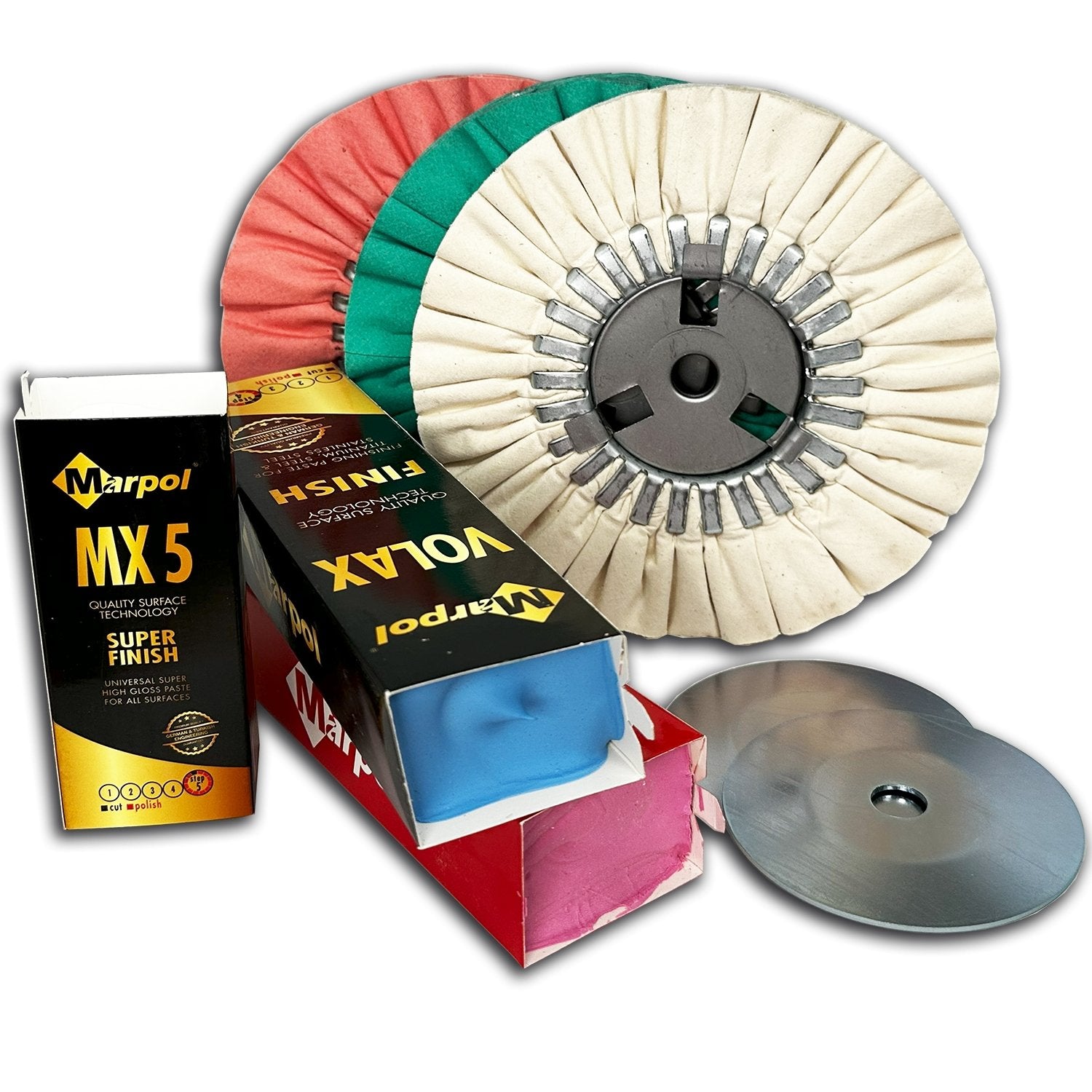
Buffing Kit